Memory Chip Shortage Pushes Apple to Raise iPhone Prices

Apple raised the starting price of the iPhone 18 Pro to $1,199 this week, a $100 jump from last year's model, as the company confirmed that a historic memory chip shortage is now reaching well beyond servers and into consumer devices. Higher-storage variants climbed further still, with 1TB Pro models up $300 and 2TB Pro Max configurations up $500 year over year.
The increase follows months of warnings from outgoing Apple CEO Tim Cook, who told investors on his final earnings call in July that the industry was facing "a 100-year flood on the memory pricing." Research firm TrendForce estimates memory costs for 256GB iPhone models are now running nearly 400% higher than a year ago, and Cook said Apple expects memory prices to "keep climbing beyond September." Apple's gross margin guidance for the current quarter slipped to 47%-48%, down from 50.1% in the June quarter, with underlying margin compression of more than one percentage point even as revenue grows — a sign the $100 increase covers only part of the rising component cost.
The root cause is a capacity fight, not a raw shortage of silicon. Samsung, SK Hynix and Micron — the only three companies that make DRAM at scale — are steering wafer production toward high-bandwidth memory (HBM) for AI data centers, where margins are far higher than on conventional DRAM used in phones and laptops. TrendForce forecasts server DRAM contract prices rising 13%-18% quarter-over-quarter in the third quarter of 2026, with NAND flash contracts up 10%-15%, a moderation from roughly 60% quarter-over-quarter jumps earlier in the year but still a sustained, compounding increase. SK Hynix shares jumped 7% on September 8 as investors priced in the shift, while Apple stock slipped roughly 1% on the same news.
Why this matters beyond smartphones
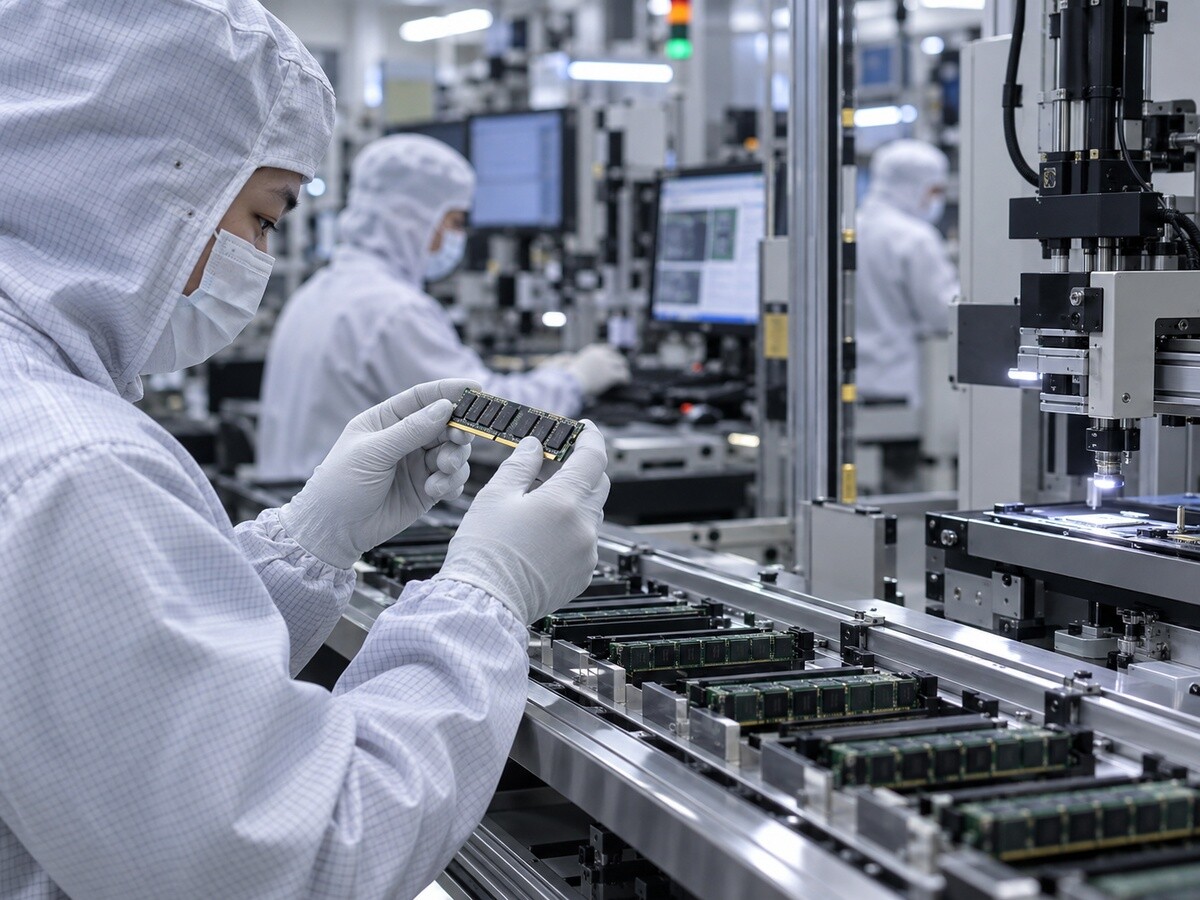
DRAM and NAND are not specialty components confined to consumer electronics. The same chips sit inside industrial PCs, programmable logic controllers, SCADA systems, network switches, servers, telecom base stations and the embedded control boards used across manufacturing lines. With only three global suppliers of conventional DRAM, and all three currently prioritizing AI customers willing to pay HBM-level prices, buyers of ordinary industrial-grade memory are competing for a shrinking slice of fab capacity. TrendForce and multiple industry analysts expect the shortage to persist beyond 2027 rather than resolve as a typical inventory cycle, because the AI data center buildout driving it shows no sign of slowing.
Global industry impact
For manufacturers of PCs, smartphones, networking gear, automotive electronics and industrial automation equipment, this is a direct input-cost problem, not a distant financial-market story. Component price increases of this size typically show up on customer invoices within two to three quarters, either as higher list prices, longer lead times, or both. Micron's own guidance points to the scale of the shift: the company projects fiscal fourth-quarter 2026 revenue near $50 billion with an 86% gross margin on server-focused products, underscoring how firmly capacity has moved toward the highest-margin buyers. Electronics distributors and contract manufacturers are already reporting extended lead times on standard DDR5 and NAND parts as smaller industrial buyers get pushed down supplier priority lists behind hyperscale cloud customers.
What to watch next
The next signal to watch is whether Samsung and SK Hynix's next earnings updates confirm TrendForce's Q3 contract-price forecasts or show further acceleration; a number above the 13%-18% DRAM range would indicate the shortage is worsening rather than stabilizing. It is not yet confirmed whether new fab capacity announced by Samsung, SK Hynix and Micron earlier in 2026 will meaningfully ease supply before 2027 — industry forecasts treat this as a probability, not a certainty, given the multi-year lead time to bring new memory fabs online. Any company that budgets on the assumption memory prices flatten out in the next two quarters is working against the weight of current industry guidance.