ISO 9001:2026 Is Now Officially Published, Digital Content From Oct. 1

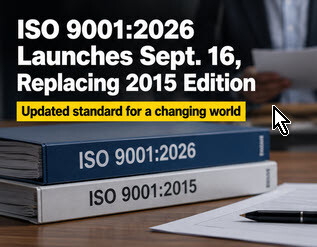
The International Organization for Standardization (ISO) has officially published ISO 9001:2026, confirming the launch date that had been anticipated for weeks and giving certified organizations their first look at exactly what has changed in the first full revision of the world's most widely used quality-management standard since 2015.
This is an update to an earlier item on ISO 9001:2026's anticipated launch. What is new here: the standard has now actually been published, not merely scheduled, and ISO has released specific details of what changed.
What changed, confirmed by ISO
- ISO's own announcement, published September 16, 2026, states: "Today, the International Organization for Standardization (ISO) announced the launch of ISO 9001:2026," per ISO's official news release.
- The revision places greater emphasis on leadership, a culture of quality, and ethical behavior; provides enhanced clarity on how organizations should consider risks and opportunities in strategic decision-making; and adds a new explanatory section clarifying the intent behind each requirement.
- ISO 9001:2026 adopts the latest Harmonized Structure used across ISO management-system standards, the common framework shared with standards such as ISO 14001 and ISO 45001.
- ISO 9001 will be part of the organization's first offering of "digitally enhanced content," available starting October 1, 2026.
- Separately, certification body SGS notes the revision explicitly adds climate-change considerations and updates the standard's clauses on organizational knowledge and continual improvement, while retaining the Annex SL high-level structure.
What is still unconfirmed
ISO's release does not state a transition deadline for organizations currently certified to ISO 9001:2015. Certification bodies typically require a multi-year transition period after a major revision, set by the International Accreditation Forum (IAF) rather than ISO itself, but as of this publication that period has not yet been formally announced. Organizations should not assume a specific transition date until IAF issues an official communique.
Why it matters for exporters
ISO 9001 certification is one of the most commonly required quality credentials in international industrial procurement and export contracts. Once the transition period is confirmed, certified organizations — including Iranian exporters who hold ISO 9001:2015 certification to satisfy foreign buyers' procurement requirements — will need to plan an audit and recertification cycle against the new requirements, particularly the added leadership, risk-management and climate-consideration elements, well ahead of whatever deadline the IAF eventually sets.
What to watch
The key remaining data point is the IAF's transition-period announcement. Once that is published, organizations will have a concrete deadline against which to plan recertification audits.