Canada Hits US Steel, Aluminum With 50% Tariffs

Canada's retaliatory tariffs on $27.6 billion worth of U.S. goods took effect at 12:01 a.m. on September 8, with duties on steel and aluminum products doubling from 25% to 50% to match the rate Washington had already imposed on Canadian metals. The move marks the latest escalation in a trade dispute that has steadily unraveled the USMCA framework governing commerce between the two countries.
The counter-tariffs were structured as a dollar-for-dollar response: the U.S. had imposed a 50% tariff on $27.6 billion of Canadian goods effective August 22, after trade talks between the two governments broke down on August 21. Canada's Department of Finance said the concessions Washington had requested "would have undermined the interest of workers, businesses, and all Canadians."
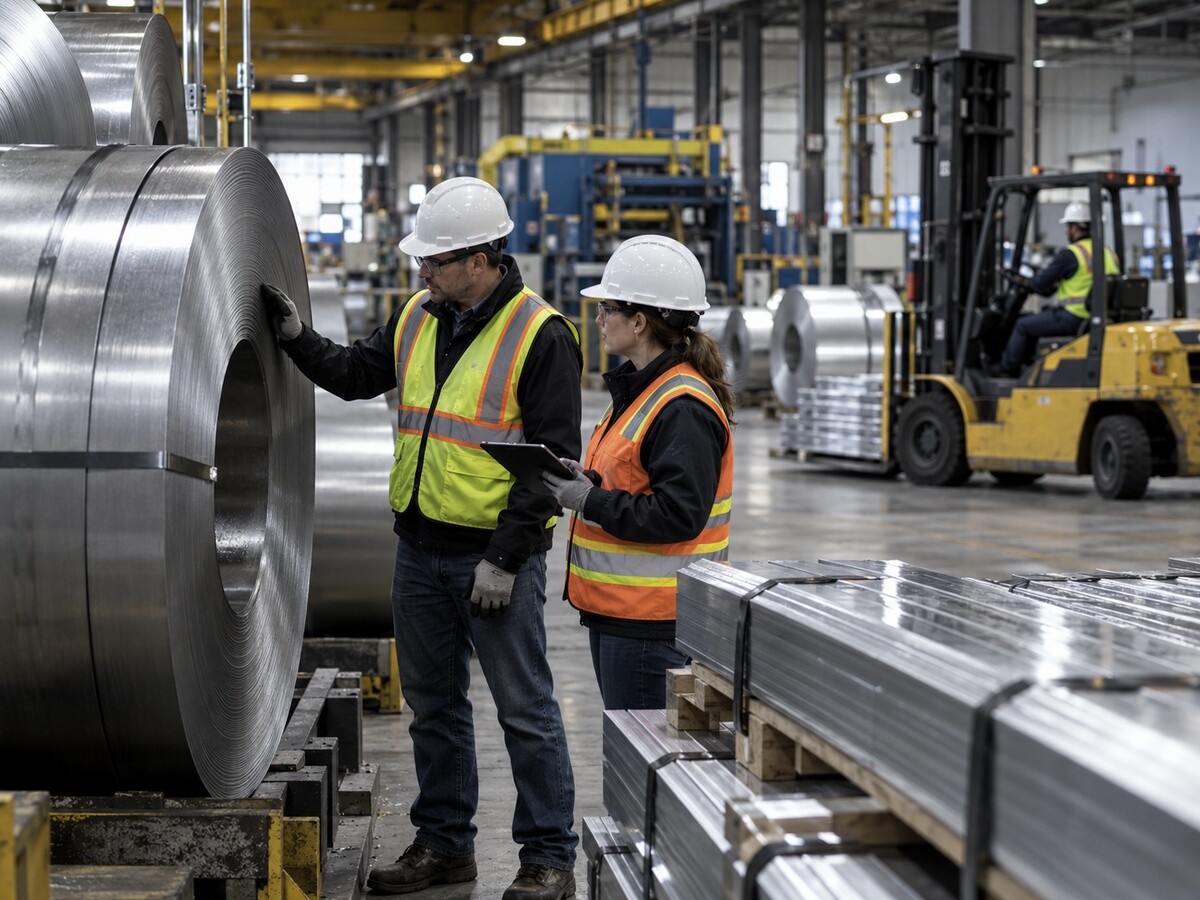
Beyond steel and aluminum, Canada's counter-tariff list -- worth an estimated C$31.15 billion based on 2025 trade data, according to S&P Global Commodity Insights -- spans dairy products, home appliances, agricultural equipment, pulp and paper, plastics and electronics. Metals account for the largest single share of the list: roughly C$13.6 billion, or about 44% of targeted goods, with basic and semi-finished steel products alone worth an estimated C$10.17 billion and flat-rolled aluminum products worth roughly C$1.39 billion, per S&P Global's analysis. Some other base metals face lower rates of 15% or 25%.
Why This Matters
Canada and the U.S. have long run one of the world's most integrated steel and aluminum supply chains, with metal often crossing the border multiple times between smelting, rolling and final fabrication. A 50% tariff wall on both sides raises costs at every one of those crossings, on top of the sweeping U.S. Section 232 and Section 338 tariffs that triggered Canada's response in the first place. Industry analysts had expected Washington to offer Canada a reduced rate as part of a negotiated deal -- the kind of exception floated for some other trading partners -- but talks collapsed instead, catching some steel producers off guard.
Global Industry Impact
For manufacturers and metal traders outside North America, the dispute adds to a year in which tariff uncertainty has already been a major driver of global metals pricing -- most visibly in copper, where a still-undecided U.S. tariff on refined imports has helped push prices to record highs. A prolonged Canada-U.S. metals standoff is likely to push some steel and aluminum volumes that would otherwise have crossed the border toward other markets, adding to global supply available to buyers in Asia, the Middle East and Europe, though the scale of that redirection will depend on how long the tariffs remain in place. It also reinforces a pattern industrial buyers have had to adapt to through 2026: sourcing decisions increasingly need to account for tariff risk, not just price and quality, wherever the metal originates.
What to Watch Next
The dispute shows no sign of near-term resolution. President Trump has threatened an additional 50% tariff on Canadian vehicles and steel beginning January 1, 2027, though this has not been finalized and could still change through further negotiation. Whether the two governments return to talks before that date, and whether Canada's support package for affected workers and businesses is enough to offset the near-term hit to exporters, are the key questions for the months ahead.
Sources
Government of Canada, Department of Finance; CNBC; The Washington Post; S&P Global Commodity Insights; Manufacturing Dive.