
trends

Hydrogen-Based Steelmaking Moves From Pilot to Industrial Scale
Sweden's HYBRIT project and Japan's JFE Steel have both produced hydrogen-reduced iron at meaningful scale in the past two years, signaling that hydrogen-based direct reduction is moving beyond the lab — a shift with direct relevance for gas-based DRI producers like Iran.
Read more
Tin Prices Stay Near Record Highs Eight Months After January Spike
World Bank data show tin prices holding near January 2026's all-time high through mid-2026, driven by supply deficits in Myanmar and DR Congo alongside heavy speculative trading — a sustained cost pressure for electronics and packaging industries.
Read more
Zinc Prices Buck the Base-Metals Downturn, World Bank Data Shows
World Bank commodity data show zinc's monthly average price rising from $3,539 to $3,599 per metric ton between June and July 2026, even as the broader base-metals price index fell, a divergence with direct cost implications for galvanizing and steel-coating industries.
Read more
Nickel's Spring Rally Reverses: What July's Drop Means for Buyers
World Bank data shows nickel's average price fell 5.3% in July 2026 after a spring rise, driven by Indonesian supply growth, record inventories, and soft stainless-steel and battery demand.
Read more
Global Manufacturing PMI Hits 13-Month Streak Above 50
The J.P.Morgan Global Manufacturing PMI rose to 52.3 in August 2026, its highest reading in three months and a 13th straight month of expansion, with export orders and hiring both accelerating.
Read more
Red Sea Return Splits 2026 Container Freight Rates
As shipping lines cautiously restore Red Sea/Suez transits in 2026, long-term Asia-Europe container contract rates have dropped toward pre-crisis 2023 levels even as transpacific spot rates rise for unrelated reasons — a reminder that freight-rate trends vary sharply by lane and rate type.
Read more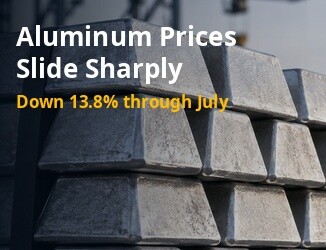
Aluminum Prices Cool Sharply Through Mid-2026: What's Behind It
World Bank data shows global aluminum prices fell nearly 14% over two months through July 2026, driven partly by a Chinese demand slump, even as some analysts still project a supply-driven deficit for the year. Here is what the data actually shows and what it means for industrial buyers.
Read more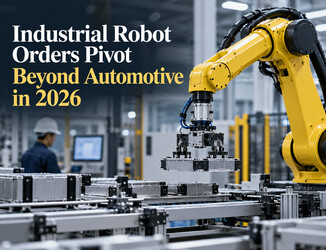
Industrial Robot Orders Pivot Beyond Automotive in 2026
North American robot orders grew in Q2 2026, but for the first time non-automotive buyers - semiconductor, life sciences and food manufacturers - made up the majority of units purchased, signaling where automation investment is heading next.
Read more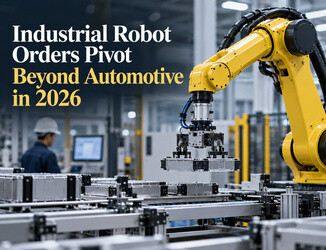
Industrial Robot Orders Pivot Beyond Automotive in 2026
North American robot orders grew in Q2 2026, but for the first time non-automotive buyers - semiconductor, life sciences and food manufacturers - made up the majority of units purchased, signaling where automation investment is heading next.
Read more